Tag
Stablecoins
Stablecoins and on-chain payments — issuance, reserves, de-pegs and settlement rails.
60 analyses

Ethena diversifies USDe backing with $1B FalconX facility — structural shift or yield optimization?
Ethena has launched a $1 billion warehouse facility with FalconX to back its USDe stablecoin, aiming to reduce dependence on crypto-native funding rates. This move represents an institutional-grade effort to stabilize yields and enhance liquidity management for the protocol's backing assets.

US Crypto Regulatory Clarity Delayed: What Does It Mean for Institutional Capital?
The CEO of the Solana Policy Institute indicates a mere 10% chance of the CLARITY Act passing before the November midterm elections, citing congressional gridlock and objections from traditional financial institutions. This assessment, corroborated by prediction markets, suggests a prolonged period of regulatory uncertainty in the US, which could continue to deter new institutional capital inflows.

Ripple's RLUSD Stablecoin Dynamics: Transit Corridor vs. DeFi Accumulation?
Ripple's RLUSD stablecoin saw $449 million minted and $448.9 million burned on the XRP Ledger (XRPL) within 30 days, resulting in a 99% burn rate. This indicates a high velocity of use for institutional settlements rather than long-term accumulation, contrasting with Ethereum's $225 million net inflow for RLUSD over the same period. The net supply growth on XRPL remained near zero, exposing a cross-chain imbalance.
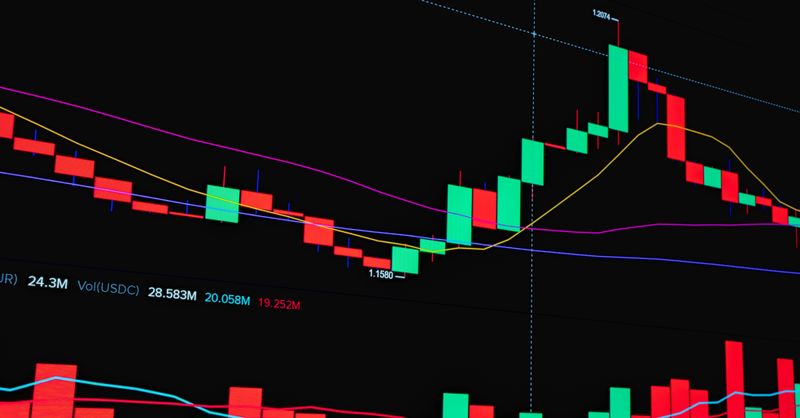
Crypto Market Outlook — Neutral Stance Prevails as Fundamental Strengths Meet Market Indecision
Our aggregate house view indicates a persistent neutral bias (51%), driven by institutional integrations and stablecoin credibility boosts that have yet to translate into significant directional capital flows, leading to range-bound price action across major assets and divergent altcoin performance.

Tether's First KPMG Audit: Does CEO's Dismissal of Critics Impact Stablecoin Demand?
Tether's CEO, Paolo Ardoino, stated he 'doesn't care' about critics following the release of the company's first audit by KPMG. While this marks a step towards transparency, the market's reaction is expected to be muted as the audit's findings are not yet public and the core utility of USDT remains unchanged. The event is unlikely to significantly impact capital flows or liquidity.

Tether's KPMG Audit: A Credibility Boost, But Limited Immediate Market Impact for BTC/ETH?
Tether has announced the completion of its first independent audit of reserves by KPMG U.S., addressing years of transparency concerns. While this enhances Tether's long-term credibility, immediate market reaction for BTC and ETH is expected to be neutral as the market has largely priced in Tether's operational stability.
Stablecoins Dominate Crypto Card Spend: A Shift in Utility, Not a Capital Inflow Catalyst?
Dollar-backed stablecoins, primarily USDC and USDT, have captured 84% of crypto card spending, reversing a trend previously dominated by euro tokens. This reflects a structural shift in stablecoin utility and reinforces the dollar's role in crypto payments, though its immediate impact on overall crypto market liquidity or asset prices is assessed as limited.
XRP Ledger proposes confidential transactions: A catalyst for institutional RWA, or long-term potential?
The XRP Ledger (XRPL) is proposing a 'confidential transactions' feature to encrypt tokenized asset balances and payment amounts for institutions. This upgrade targets the growing $1.38 billion RWA market on XRPL, but requires 80% validator support within two weeks to go live.

USDC Expands to OKX's X Layer: Incremental Utility or Catalyst for Capital Flows?
Circle has launched native USDC and its Cross-Chain Transfer Protocol (CCTP) on OKX's X Layer, an Ethereum layer-2 network. This move aims to expand USDC utility within a major exchange's ecosystem, facilitating payments, DeFi, and cross-chain transfers, though significant new capital inflows to the broader market are not immediately anticipated.

XRP: Does Concentrated Leverage at Bybit Threaten the $1.00 Support Level?
XRP's total derivatives open interest, at $2.36 billion, is more than six times its daily spot volume. A notable shift in stablecoin-margined open interest from Binance to Bybit has concentrated leverage, raising concerns about potential liquidations if XRP breaks below the key $1.00 level.
Open USD vs. USDC: Is the Stablecoin Competitive Landscape Shifting?
Market concerns regarding Open USD (OUSD) as a direct threat to USDC have softened following statements from Coinbase, Visa, and Mastercard confirming a multi-stablecoin approach. While initial fears caused a 20% decline in Circle's market value, current evidence suggests OUSD is viewed as a complementary payment rail rather than a replacement.

Dinari Tokenizes S&P 500 for Self-Custody: A Catalyst for RWA or Niche Offering?
Dinari's introduction of tokenized S&P 500 stocks for US self-custody wallets using USDC marks a step forward for Real World Assets (RWA). While it contributes to the RWA narrative and stablecoin utility, direct capital flows and immediate crypto market impact are expected to be modest.

Tether's Reserve Drop: Market Impact Beyond Q2 Financials?
Tether reported a significant drop in excess reserves, falling by over $4 billion in Q2 2026, contrasting with a prior period's profit. While this signals a potential shift in its capital structure, current market data shows stablecoin pricing and major crypto assets remain unaffected.

Circle's NY Trust Charter: Regulatory Clarity or Market Catalyst?
Circle, issuer of USDC, secured a New York trust charter, enabling fiduciary and custody services under state banking law. This follows earlier OCC approval for a national trust bank, bolstering regulatory clarity for institutional clients. While a structural positive, immediate market reaction for USDC and broader crypto assets has been flat.

Visa CEO's Stablecoin Stance: Implications for Market Competition and Capital Flows?
Visa's CEO stated the company will remain 'multi-coin, multi-chain' and "not to pick winners" regarding stablecoins. This indicates a strategic neutrality rather than endorsement of specific stablecoins like Tether (USDT) or USDC, focusing on payment infrastructure rather than asset selection.
WEMIX Stablecoin Breach: Contained Incident or Broader DeFi Trust Erosion?
WEMIX reported a contract breach resulting in the unauthorized issuance and movement of approximately $724,000 in USDC.e. The incident prompted WEMIX to suspend bridges and liquidity pools, raising concerns about the project's security and operational stability.
Circle's OCC Trust Bank Approval: A Catalyst for Institutional USDC Flows?
Circle has secured final OCC approval for Circle National Trust, a federally regulated entity designed to hold digital assets and manage USDC reserves. This move strengthens USDC's position for institutional adoption, potentially driving long-term capital inflows.

Crypto Exchanges as Brokerages: New Capital Flow or Regulatory Minefield?
Centralized crypto exchanges like MEXC are reportedly allowing users to trade traditional assets such as gold, oil, and stocks using stablecoins. While this expands utility, the 'fine print' regarding asset ownership and regulatory compliance introduces significant uncertainty, suggesting a limited direct impact on crypto asset prices.

Samsung Wallet Adds Stablecoin Support — Will It Drive Demand or Just Narrative?
Samsung Wallet's planned native stablecoin support, including USDC, represents a significant step for mainstream visibility. However, the absence of key implementation details and historical precedent for similar integrations suggests a low probability of immediate, measurable market impact on stablecoin demand or capital flows.

Coinbase's AI Agent Payments: A Niche Development or Infrastructure Shift?
Coinbase has launched new tools enabling businesses to accept USDC payments directly from autonomous AI agents, alongside AI trading features and a developer kit. This initiative aims to build financial infrastructure for the 'agentic economy,' where AI agents manage financial tasks. While a strategic move towards future AI integration, its immediate impact on capital flows or token demand is currently limited.
Crypto Market Outlook — Consolidation Persists Amidst Divergent Liquidity Signals and Sector Flows
The crypto market remains in a state of structural consolidation, with a 52% probability of a neutral outlook, driven by divergent liquidity signals and a lack of conviction in short-term directional moves.
Crypto Market Outlook — Consolidation Persists Amidst Divergent Liquidity Signals
The crypto market is most likely to experience continued consolidation over the next 1-2 weeks, anchored by a prevailing neutral sentiment driven by divergent sector-specific liquidity and a lack of clear directional catalysts.

Crypto Market Outlook — Consolidation Dominates Amidst Divergent Sector Flows
The crypto market is exhibiting a neutral bias, characterized by structural consolidation and mixed liquidity signals. While institutional interest continues to grow, divergent sector performance and persistent macro uncertainties suggest a period of sideways movement is most likely.

Bolivia's USDT Recognition: Emerging Market Dollarization or Regulatory Gambit?
Bolivia is considering recognizing Tether's USDT as a payment currency due to a severe US dollar shortage. This move highlights stablecoins' role in emerging markets facing currency instability. Separately, Bitcoin miners' pivot to AI infrastructure is facing investor scrutiny over insider stock sales, even as some miners like CleanSpark secure large data center deals.

Crypto Market Outlook — Structural Consolidation Persists Amidst Divergent Liquidity Signals
The crypto market is most likely to remain in a structural consolidation phase over the next two weeks, characterized by mixed liquidity signals and a lack of strong directional conviction, despite ongoing institutional infrastructure developments.

Visa's Stablecoin Platform Launch: OUSD Integration and Market Implications
Visa has launched its Visa Stablecoin Platform (VSP), an enterprise solution for minting, holding, and transferring stablecoins, featuring Open USD (OUSD) as its initial supported token. This initiative aims to provide institutional-grade infrastructure for financial entities entering the digital asset space, potentially driving significant capital flows if widely adopted.

Tether's $20M Ualá Investment: Strategic Foothold or Narrative Play in LatAm?
Tether reportedly invested $20 million into Argentine neobank Ualá as part of a larger $197 million funding round. This move aligns with Tether's stated strategy to increase its presence in Latin America, following similar investments in regional crypto platforms. While it reinforces Tether's brand and strategic positioning, the direct capital flow impact on USDT or major cryptocurrencies is expected to be minimal.

Ostium DEX Oracle Exploit: Localized Impact or Broader DeFi Risk Signal?
The Ostium Perp DEX, built on Arbitrum, suffered an $18 million USDC exploit due to a compromised oracle signer key. While the incident is significant for the protocol, its broader market impact is likely localized, affecting investor confidence in specific DeFi segments rather than causing systemic contagion.

Bitcoin, Ether ETFs See Inflows Amid Broader Market Gains; PayPal Acquisition Offer Dominates FinTech News
US spot Bitcoin ETFs recorded $181 million in inflows on Tuesday, recovering from previous outflows, while Ether ETFs added $58 million. This coincided with a broader market rally, with BTC and ETH prices rising 3.0% and 4.8% respectively. Separately, PayPal shares surged over 21% on a reported $53 billion acquisition offer from Stripe and Advent International, signaling consolidation and expansion in the digital payments space.

Ethereum Foundation Privacy Team Spins Out — Does EthSystems Drive Institutional Capital?
Ex-Ethereum Foundation privacy researchers have launched EthSystems, a for-profit firm focused on building privacy solutions for institutional adoption of Ethereum. Backed by notable entities, the firm aims to address the lack of modular privacy tools for regulated financial players. Its success hinges on translating this technical capability into tangible institutional demand and capital deployment.

XRP's AI Payment Integration: A Niche Play or a Catalyst for Broader Adoption?
Ripple has joined the Linux Foundation's x402 Foundation as a premier member, aiming to integrate XRP and its RLUSD stablecoin into an open-source initiative for AI agent payments. The x402 protocol seeks to standardize internet-native payments for AI, making them as seamless as data exchange. While this move highlights XRP Ledger's technical suitability for machine-to-machine transactions, its immediate market implications for XRP are likely to be limited.

Wall Street's Caution on Circle: Does USDC Face a Slow Erosion or Sustained Stability?
Major financial institutions have expressed caution on Circle's outlook, citing pressures on USDC's economics. While the stablecoin's peg remains stable at $0.9998, the analysis suggests potential long-term shifts in market share and institutional perception rather than an immediate liquidity crisis.

JCB Explores USDC Payments in Japan — Will it Drive Real Demand or Remain Narrative?
Japan's largest payment network, JCB, has signed a Memorandum of Understanding (MOU) with Circle to explore the use of USDC for cross-border treasury operations and merchant payments within Japan. This initiative, part of Japan's broader push for regulated stablecoin adoption, focuses initially on a proof-of-concept for internal fund transfers and evaluating merchant transactions for international visitors. While a step towards mainstream adoption, the immediate market impact is likely limited, contingent on successful testing and commercial deployment.

Hyperliquid's Growth Challenges USDC Economics: A Structural Shift?
JPMorgan has downgraded earnings estimates for Circle and Coinbase, citing a new partnership with Hyperliquid that forces the two firms to compete for USDC distribution, potentially eroding long-term stablecoin margins.

Bolivia Explores USDT Integration: Potential for 'Stealth Dollarization' in Emerging Markets?
Bolivia is reviewing the potential integration of Tether (USDT) into its regulated payment system, a move that reflects a broader trend of emerging market economies turning to dollar-denominated stablecoins amidst currency shortages and depreciation. This development, alongside similar patterns observed in Nigeria, suggests stablecoins are increasingly acting as a private workaround for citizens and merchants before formal government recognition, potentially weakening domestic monetary policy transmission and challenging capital controls.

Bolivia Weighs USDT for Payments: A Catalyst for Stablecoin Adoption or Limited Immediate Impact?
Bolivia is assessing the inclusion of Tether's USDT in its national payment system, following a 2024 crypto transaction unblock and significant local crypto volumes. While this marks a notable step in stablecoin adoption, the country's FATF gray list status and the preliminary nature of the discussions suggest a cautious approach to immediate market impact.

XRP's Institutional Shift: Can New Products Sustain Demand Three Years Post-Ruling?
Three years after the landmark SEC ruling, XRP has transitioned from a regulatory target to an asset with growing institutional touchpoints. While the ruling spurred a significant price rally and led to the launch of spot XRP ETFs, recent outflows suggest that sustained capital inflows are crucial for future price appreciation amidst broader market weakness.

SBI Holdings pivots to Solana: Institutional RWA adoption or branding exercise?
SBI Holdings has transitioned its blockchain initiative from R3 Corda to Solana, forming a joint venture with the Solana Foundation to focus on stablecoin issuance and tokenized real-world assets (RWAs). This move aims to integrate Japanese domestic liquidity with global onchain markets, though the immediate market impact remains speculative.

Circle's new trust bank: A regulatory win or limited market impact?
Circle has secured final OCC approval to establish Circle National Trust, a federally supervised trust bank focused on digital-asset custody. While a strategic step for Circle's long-term infrastructure, the bank cannot take ordinary deposits or make loans, limiting its immediate market impact on USDC demand or broader crypto capital flows.

Circle's OCC Trust Bank Approval: A Catalyst for Institutional USDC Flows or Priced-In Regulatory Progress?
Circle has secured final OCC approval for Circle National Trust, enabling federally supervised digital asset custody and a path for USDC reserve management. This strengthens regulatory alignment for the stablecoin issuer, potentially facilitating future institutional capital flows into the digital asset ecosystem, although immediate market-wide price action appears limited.
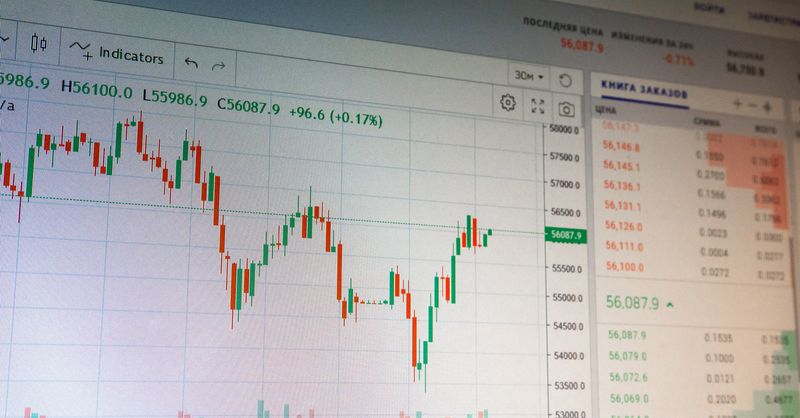
Crypto Market Outlook — Structural Consolidation and Fragmented Liquidity Drive Neutral Bias
The crypto market is most likely to maintain a neutral stance, driven by persistent structural consolidation and fragmented liquidity, despite mixed signals from institutional adoption and emerging narratives.

Circle Gains OCC Trust Charter: Institutional Legitimacy vs. Market Reality
Circle has secured final approval from the OCC to operate as a national trust bank under the name 'Circle National Trust'. While this enhances institutional compliance, the immediate market impact remains neutral as it primarily facilitates internal custody and future regulatory alignment.

Revolut's USDT Delisting in Europe: A Localized MiCA Impact or Broader Stablecoin Shift?
Revolut's decision to discontinue USDT support for customers in the European Economic Area (EEA) and Switzerland by August 31, 2026, is a direct response to the EU's MiCA regulation. This move, while significant for affected users, is expected to have a negligible impact on USDT's global liquidity or the broader crypto market, primarily shifting demand to MiCA-compliant stablecoins within the region.

Crypto Market Outlook — Consolidation Bias Persists Amidst Fragmented Capital Flows
The crypto market is most likely to maintain a neutral, consolidating bias over the next 1-2 weeks, driven by fragmented capital flows and a lack of decisive catalysts, despite localized asset-specific risks and some outlier performance.

USDT Returns to Bitcoin via RGB: Structural Utility or Niche Experiment?
Tether is launching USDT natively on Bitcoin using the RGB v0.11.1 protocol. While this offers private, Lightning-based settlements, its success depends on overcoming the entrenched network effects of stablecoin usage on Tron and Ethereum.

Crypto Market Outlook — Persistent Consolidation Amidst Liquidity Fragmentation
Market sentiment remains anchored in a neutral state as divergent capital flows and regulatory shifts counteract speculative momentum, suggesting a continued sideways trajectory.

USDC Dominance Hits 70%: Structural Shift or Institutional Branding?
USDC has captured 70% of adjusted stablecoin transaction volume as of mid-2026, driven by integration into traditional banking infrastructure. While this signals institutional trust, the emergence of consortium-backed stablecoins poses a direct threat to Circle's fee-based business model.

XRPL Stablecoin Supply Growth: RLUSD Dominance Masks Broader Adoption Questions
Stablecoin supply on the XRP Ledger (XRPL) has surged to nearly $890 million, a 20.56% increase over 30 days, primarily due to Ripple's RLUSD. The introduction of USDV, a second dollar-backed token, marks a significant development, potentially establishing XRPL as a multi-issuer settlement rail. However, adoption metrics beyond supply, such as trading volume and reserve attestations, are crucial for validating this trend.

Crypto Market Outlook — Consolidation Bias Persists Amidst Divergent Capital Flows
The crypto market is most likely to exhibit range-bound consolidation, anchored by a prevailing neutral sentiment, as institutional capital flows diverge and regulatory pressures influence stablecoin liquidity.

XRP's Bullish Technical Signal: Can AI Agent Volume Sustain the Momentum?
XRP recently broke above its middle Bollinger Band, signaling a potential medium-term bullish shift. This move coincides with a 111% increase in native token settlements by the x402 AI agent protocol over 30 days, suggesting growing utility. However, the market's ability to sustain this trend beyond initial technical reactions will depend on whether these micro-settlements translate into significant capital inflows.

Revolut USDT Delisting: Regulatory Compliance or Liquidity Fragmentation?
Revolut will cease USDT support in Europe by August 31, 2026, citing 'regulatory and risk considerations.' This aligns with broader industry trends where CASPs are prioritizing MiCA-compliant stablecoins to mitigate legal risk.

Revolut Delists USDT: MiCA's Impact on European Stablecoin Liquidity?
Revolut's decision to delist Tether (USDT) by August 31 aligns with the full implementation of the EU's MiCA regulation, which restricts unauthorized stablecoins in the EEA. While this marks a significant compliance move by a major fintech, the global market impact on USDT's liquidity and the broader crypto ecosystem is expected to be contained, primarily shifting stablecoin usage within Europe.

US Sanctions ISIS-Linked Tron Wallets: Limited Direct Market Impact, Heightened Regulatory Scrutiny?
The US Treasury Department has sanctioned 134 cryptocurrency wallets linked to ISIS-K, with 131 operating on the Tron blockchain. These wallets reportedly moved over $1.4 million since 2023. While Tether has frozen associated funds, the direct impact on overall crypto capital flows is assessed as low. The event may, however, contribute to increased regulatory scrutiny on Tron and other networks perceived as facilitating illicit activities.

RLUSD Liquidity Shift to XRPL: Structural Growth or Isolated Ecosystem Metric?
Recent data indicates that 51-52% of the RLUSD stablecoin supply now resides on the XRP Ledger, a significant increase from 17% in April 2025. While this signals increased on-chain utility for Ripple's stablecoin, the market impact remains tied to whether this drives net-new capital inflows or simply redistributes existing liquidity.

Standard Chartered and Circle: Institutional USDC Minting Infrastructure
Standard Chartered has launched a bank-led USDC minting and redemption service for institutional clients, starting in the Dubai International Financial Centre (DIFC). This move bridges traditional banking compliance with on-chain liquidity, aiming to capture institutional demand for regulated stablecoin access.

Robinhood's Ethereum L2 and Tokenized Stocks: A Strategic Move or Immediate Market Catalyst?
Robinhood has launched Robinhood Chain, an Arbitrum-powered Ethereum Layer-2 network, introducing 'Stock Tokens' for non-U.S. users and expanding DeFi features within its wallet. While a significant strategic development for Robinhood, the immediate impact on broader crypto capital flows and asset prices is expected to be moderate, given current market conditions and geographic restrictions.

Open USD Challenges USDC Network Effect: Can Backers Translate to Flow?
Circle CEO Jeremy Allaire stated that Open USD's (OUSD) 140+ corporate backers are only relevant if the stablecoin achieves significant, regulated transaction flow. He emphasized that established network effects, liquidity, and compliance, rather than a large partner list, are key to challenging USDC's dominance. The market will assess OUSD's ability to generate repeat usage across payments, DeFi, and treasury functions post-launch.

Crypto Market Outlook — Consolidation Bias Prevails Amidst Regulatory Scrutiny and Solana Ecosystem Dynamics
The crypto market is most likely to experience a period of consolidation and range-bound trading, driven by balanced regulatory uncertainties, stablecoin market competition, and selective capital rotation into the Solana ecosystem.

Open USD Launch: Structural Disruption or Stablecoin Market Saturation?
Over 140 companies, including BlackRock, Visa, and Coinbase, have announced 'Open USD', a stablecoin designed to remove issuer-centric fee structures and reserve-interest capture. The market reaction has been negative for Circle (CRCL), reflecting concerns over the long-term viability of current stablecoin business models.

US Stablecoin Issuer KYC Rule Proposed: Will DeFi's Unregulated Status Persist?
US regulators have proposed new Customer Identification Program (CIP) rules for stablecoin issuers, requiring identity checks at minting and redemption. However, the proposal explicitly excludes exchange trades, wallet transfers, and DeFi swaps from direct issuer KYC, acknowledging that 99% of activity occurs in secondary markets. This creates a two-tiered system, with potential implications for market structure and regulatory arbitrage.