Tokenized Equities Triple Market Share: A Catalyst for RWA Protocols or Niche Growth?
Rapid growth in tokenized equities signals long-term RWA adoption, but immediate broad market impact remains limited by absolute scale.

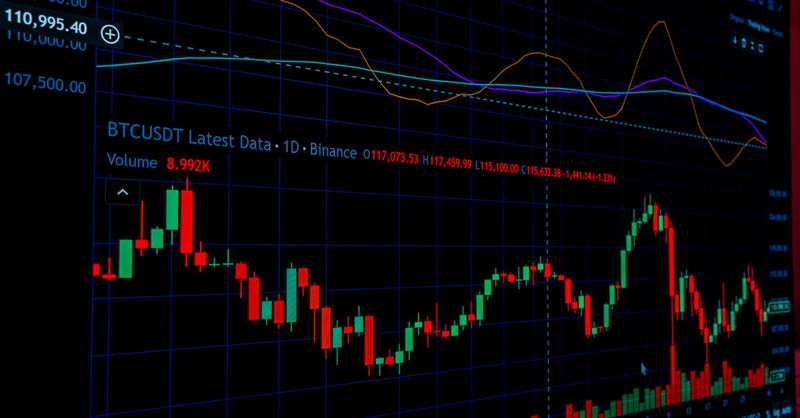
Photo by David Iloba on Pexels
Market Impact Snapshot
While tokenized equities show strong proportional growth, their current $2.8 billion market cap suggests a gradual, rather than immediate, impact on broader crypto capital flows.
Expected 7-day move · by coin
Direct exposure to the tokenized equities sector and potential for speculative interest.
Broader market sentiment influence, but limited direct capital flow impact from this niche.
General market sentiment influence, with some long-term RWA narrative benefit.
Sentiment: Neutral to mildly positive for RWA sector
Liquidity: low
Our conviction: 70/100 — an estimate, not a guarantee.
Confidence is moderate due to clear growth metrics for tokenized equities and identified dominant platforms. However, the absolute market size is still small relative to the broader crypto market, making direct price impact on major assets uncertain. Historical parallels for niche sector growth provide some guidance.
Executive summary
According to The Block, the market share of tokenized equities has expanded to 15%, representing a threefold increase from the beginning of the year. The total market capitalization for these assets now stands at approximately $2.8 billion as of August 17, 2026. This growth is reportedly dominated by platforms such as Ondo, Binance, and xStocks.
This development signifies a notable expansion within the Real World Asset (RWA) sector, indicating increasing institutional and platform interest in bringing traditional financial instruments onto blockchain rails. While the proportional growth is significant, the absolute market capitalization of $2.8 billion is relatively small when compared to the broader crypto market, which includes a total stablecoin supply of $307.4 billion. Consequently, the immediate capital flow impact on major cryptocurrencies like Bitcoin and Ethereum is expected to be limited, though specific RWA-focused tokens, such as ONDO, may experience more direct attention.
Why it matters
The observed tripling of market share for tokenized equities, while impressive in percentage terms, translates to a modest $2.8 billion in total market capitalization. This suggests that while capital is indeed flowing into this nascent sector, its volume is not yet sufficient to exert significant influence on the overall crypto market's capital flows. The primary beneficiaries of this trend are likely the platforms facilitating these tokenizations, such as Ondo, Binance, and xStocks, as they capture a growing share of this specific market segment.
From a liquidity perspective, the impact on the broader crypto market is low. The capital allocated to tokenized equities represents a fraction of total crypto liquidity. However, for specific RWA-focused tokens, particularly ONDO given its mention as a dominant player, there could be a medium liquidity impact if this trend accelerates and attracts speculative or fundamental capital directly into these assets. Institutional behavior, as evidenced by Binance's involvement, indicates a strategic interest in building infrastructure for the tokenization of traditional assets, potentially paving the way for deeper integration between DeFi and TradFi in the long term. This structural shift, though gradual, could introduce new financial products and expand the utility of blockchain technology beyond native crypto assets. The current market environment, characterized by a Crypto Fear & Greed Index of 31 (Fear) and recent Bitcoin ETF outflows of -$162 million over seven days, may temper immediate broad market enthusiasm for this narrative, despite its long-term potential.
What it means for you
The likely scenarios — and the practical takeaway.
A bullish scenario hinges on the accelerating adoption rate of tokenized equities, indicated by the 3x market share growth. This trend suggests increasing institutional confidence and capital allocation towards Real World Assets on-chain. If this growth rate continues, it could attract significant new capital into the crypto ecosystem, particularly benefiting RWA-focused protocols and their associated tokens. Ondo, as a named dominant player, stands to gain directly from increased platform usage and demand for its services, potentially leading to sustained price appreciation for ONDO as capital flows into this specific sector. Broader market sentiment could also improve as traditional finance integration narratives gain traction.
The most likely scenario involves continued, but gradual, growth in the tokenized equities sector, without an immediate, significant impact on the broader crypto market. The 3x increase in market share is a strong proportional signal for the long-term viability of Real World Assets on-chain, and the involvement of major platforms like Binance underscores institutional interest in this structural shift. However, the absolute market capitalization of $2.8 billion is still modest, suggesting that the capital inflows are not yet large enough to materially affect the overall crypto market's liquidity or price action. We anticipate that ONDO, as a prominent player in this space, will likely see some speculative interest and potentially gradual fundamental demand increases, but its price action will remain influenced by broader market sentiment and overall trading volume. This outlook would be invalidated if tokenized equities' market capitalization were to rapidly exceed $5 billion within the next quarter, signaling a more aggressive capital reallocation from traditional finance into this segment.
A bearish outlook emphasizes the relatively small absolute market size of $2.8 billion for tokenized equities, which remains a niche within the vast crypto market. Regulatory uncertainty surrounding tokenized securities could impede further growth or even lead to retractions, limiting institutional participation. The current market conditions, including a Fear & Greed Index of 31 and recent Bitcoin ETF outflows totaling -$162 million over seven days, suggest a risk-off environment where capital may not readily flow into emerging, albeit promising, sectors. This could result in the tokenized equities market remaining fragmented and failing to generate substantial, sustained demand for RWA tokens like ONDO.
Your takeaway
Monitor the growth metrics of the RWA sector, specifically tracking the total market capitalization of tokenized equities and the trading volume of key RWA tokens like ONDO, to gauge the pace of capital inflows and potential impact.
Probabilities are our editorial estimates, not financial advice. How we build these scenarios.
What would change our view?
Real analysis is falsifiable — these are the measurable signals that would move our scenario, in either direction.
Shifts us Bullish
- Total tokenized equities market cap exceeds $5 billion
- Major traditional financial institution announces direct RWA integration
- ONDO market cap surpasses $500M.
Shifts us Bearish
- New restrictive regulations on tokenized securities are enacted
- Significant capital outflows from major RWA protocols
- ONDO daily trading volume drops below $10M for 3 consecutive days.
Tick off what you've already checked — saved on this device.
Key levels to watch
Short-term · next 24 hoursINTRADAY
Our single most-likely call for today — one direction, not a list of options.
→Most likely: chops sidewaysConfidence: Medium
~$0.33
The event highlights a long-term trend rather than an immediate catalyst for significant price movement, with ONDO's current volume not indicating strong directional conviction.
Would flip if ONDO daily trading volume exceeds $50M with a positive price close.
24 hours
neutral
Immediate broad market reaction is expected to be minimal due to the small absolute market size of tokenized equities.
7 days
neutral
While the RWA narrative is positive, sustained capital inflows sufficient to impact major assets within a week are unlikely.
30 days
neutral
Continued gradual growth in tokenized equities is anticipated, but a significant shift in overall market dynamics is not probable within this timeframe.
What could invalidate this read — known unknowns, not predictions.
- Unexpected regulatory shifts impacting tokenized securities.
- Slower-than-anticipated institutional adoption of RWA solutions.
- Increased competition within the RWA sector diluting capital flows.
- A broader crypto market downturn suppressing sentiment for emerging sectors.
Bottom line
The most likely outcome is a neutral to mildly positive trajectory for the RWA sector, with tokenized equities continuing their gradual growth but having limited immediate impact on the broader crypto market. This scenario holds a 50% probability. The biggest risk to this assessment is a sudden shift in regulatory clarity, either highly restrictive or significantly enabling, which could drastically alter capital flows. Investors should watch for concrete announcements from major traditional financial institutions regarding RWA integration and significant increases in ONDO's daily trading volume as key indicators.
Matched to the highest-ranked CoinGecko listing — always double-check the contract address before trading; impostor tokens reuse real names.
Evidence & Sources
How we reached this analysis — traceable to verifiable data, not model guesswork.
- Primary source
- The Block
- AI confidence
- 70/100 — an estimate, not a guarantee.
- Published
- Aug 17, 2026
For information and analysis only — not financial advice. We are an analysis platform, not a broker, financial adviser, or seller of any asset, and we never tell you to buy or sell. Our scenario probabilities are editorial estimates developed through a combination of data analysis, automated research tools, source verification, and human editorial oversight. They may be incorrect and are not investment recommendations. Crypto is high-risk and you can lose everything — always conduct your own research before making financial decisions.
More analysis
Related analysis

Strategy Diverts $334M from Shareholders to Preferred Stock — What Does It Mean for Bitcoin Demand?
Strategy (formerly MicroStrategy) raised $333.7 million from MSTR common stock sales but allocated all proceeds to preferred stock obligations and cash reserves, bypassing new Bitcoin purchases. This marks a two-month trend of de-prioritizing direct BTC accumulation in favor of balance sheet optimization, raising questions about future institutional demand.
MicroStrategy Prioritizes Cash and Credit Over Stock Buybacks: What's the Real Impact on MSTR and BTC?
Michael Saylor, Executive Chairman of MicroStrategy, stated the company is prioritizing its STRC preferred stock, cash reserves, and credit business over stock buybacks. This strategic pivot aims to maintain significant cash balances for operational flexibility and potential Bitcoin acquisition opportunities, especially when BTC trades near its 200-day moving average. The decision comes as MSTR has seen a ~38% decline year-to-date, influenced by Bitcoin's price action.
Strategy Pauses Bitcoin Accumulation, Prioritizes Cash Reserve — What's the BTC Demand Impact?
Strategy (formerly MicroStrategy) generated $333.7 million by selling MSTR common stock but did not buy or sell Bitcoin last week, instead adding $149.1 million to its USD reserve. This marks a continued pause in the company's aggressive Bitcoin accumulation strategy, shifting focus to corporate treasury management amidst a broader market sentiment of 'Fear'.